
When uncertainty rises, retail investors buy gold. When confidence in the financial system weakens, central banks buy gold.
That distinction matters.
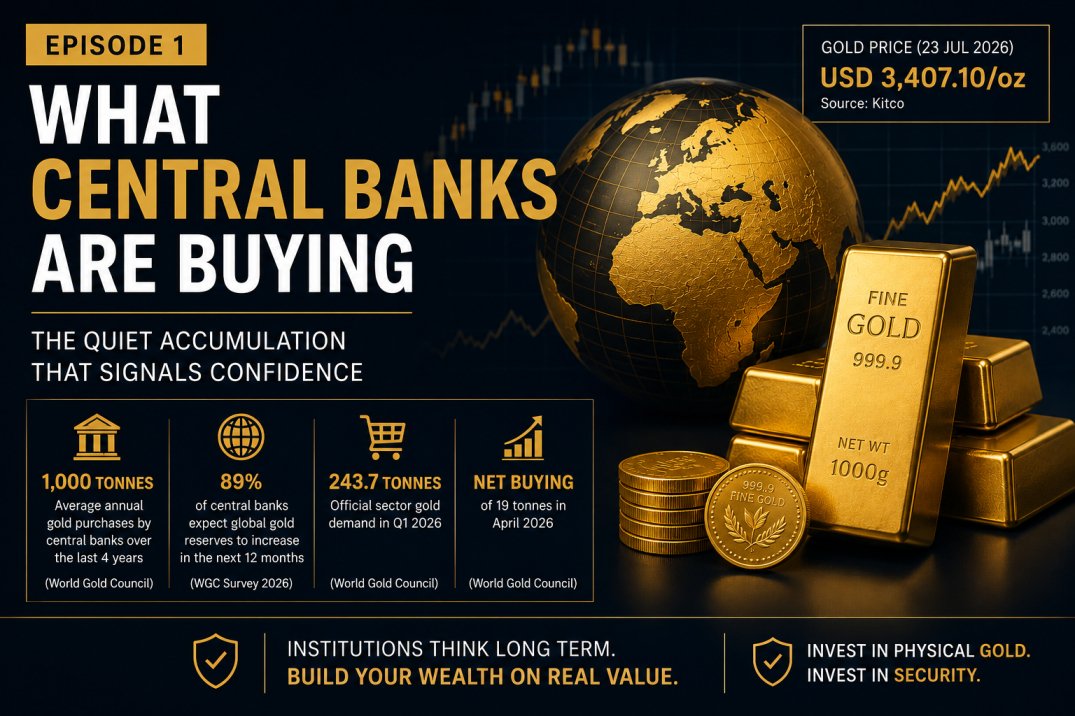
According to the World Gold Council, central banks purchased approximately 863 tonnes of gold in 2025, marking the fourth consecutive year of exceptionally strong official-sector demand. While lower than the record buying seen in 2022–2024, purchases remained far above the 2010–2021 annual average of around 473 tonnes.
Why?
Gold carries no counterparty risk. A government bond depends on a government. A bank deposit depends on a bank. Gold depends on nobody.
The trend is becoming increasingly visible in reserve management. According to the European Central Bank, gold accounted for 27% of global official reserves by value at the end of 2025, surpassing U.S. Treasuries at 22% for the first time in decades. Central banks collectively now hold more than 36,000 tonnes of gold, near levels last seen during the Bretton Woods era.
Institutional investors therefore focus less on jewellery demand and more on:
• Central-bank purchases
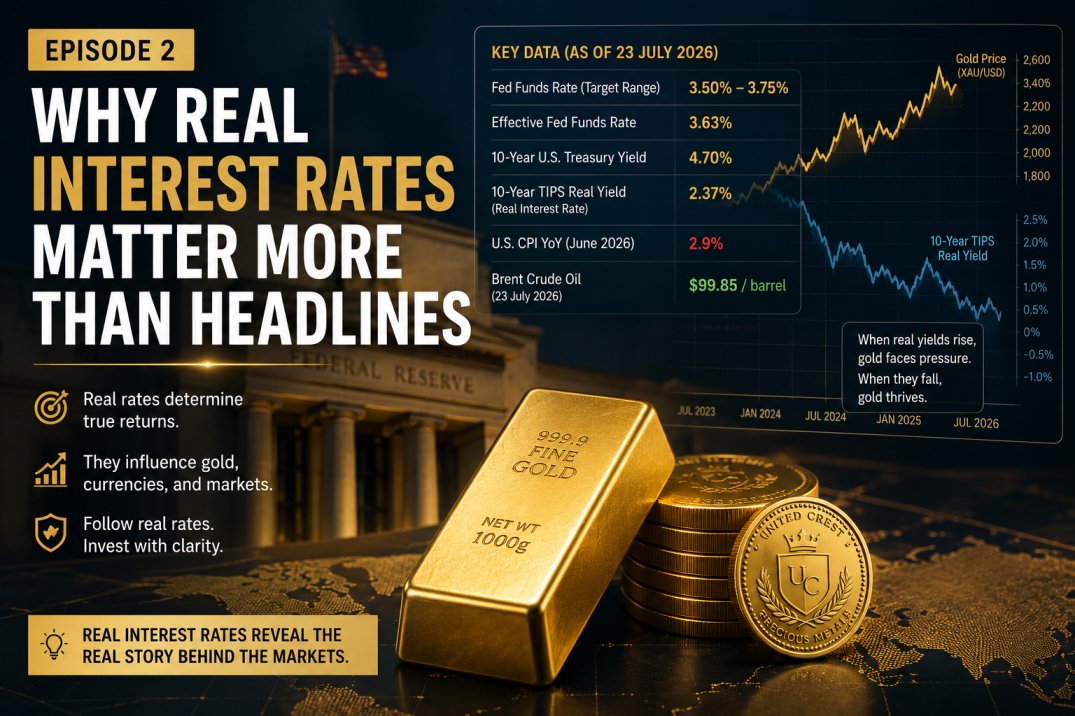
• Real interest rates
• Currency debasement risks
• Geopolitical tensions
• Reserve diversification trends
Gold's role is not growth. Its role is preservation.
For centuries, governments, currencies, and financial systems have changed. Gold has remained a monetary asset.
That is why institutions rarely ask whether gold is expensive. They ask whether the risks in the financial system are becoming more expensive than holding gold.
Author: United Crest Research Desk
Date: 5-June-26
Share: